

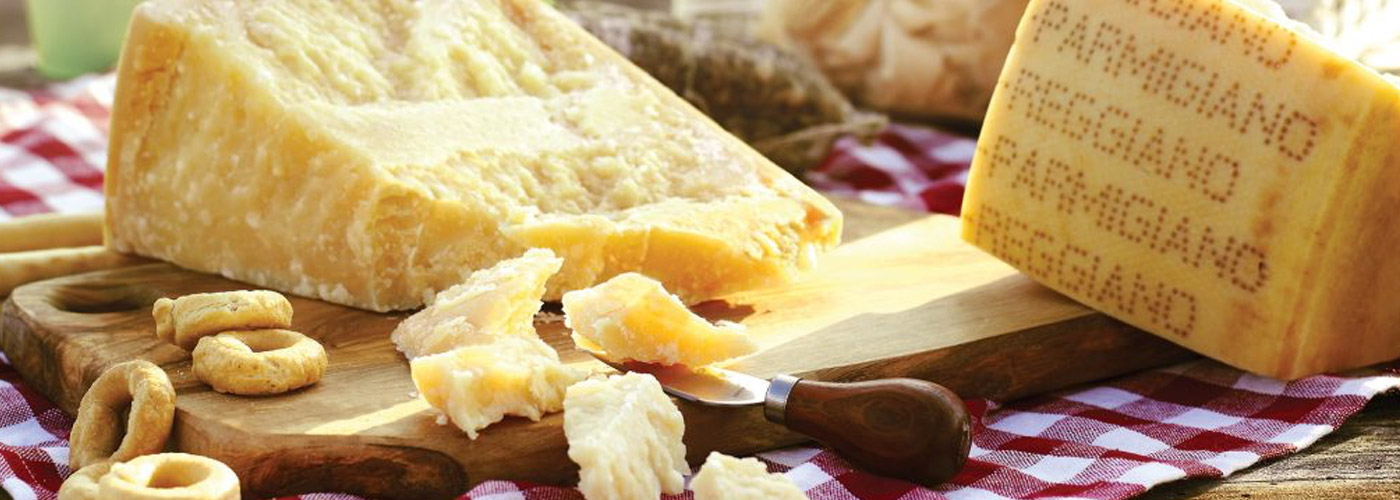
The art of cheesemaking
How it is made
A few ingredients, time-honoured skills and patience transform milk into Parmigiano Reggiano.
Milk · salt · rennet
Made by hand, every day
Quality comes from the meeting of excellent raw ingredients and the cheesemaker’s judgement. These photographs and this story come from the company’s historical archive.
Evening and morning milk
Raw milk reaches the dairy twice a day. The evening milk rests in large vats so the cream rises naturally and can be used for butter. In the morning, the partially skimmed milk is combined with fresh whole milk in traditional bell-shaped copper vats.
Whey starter, rennet and the spino
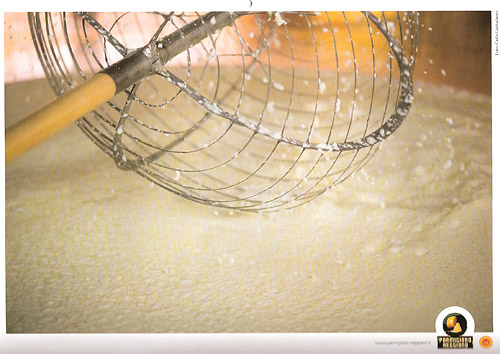
Natural whey starter, rich in lactic cultures from the previous day, and calf rennet are added. Once coagulated, the cheesemaker breaks the curd into tiny granules using the traditional whisk known as a spino.
Cooking and the twin wheels
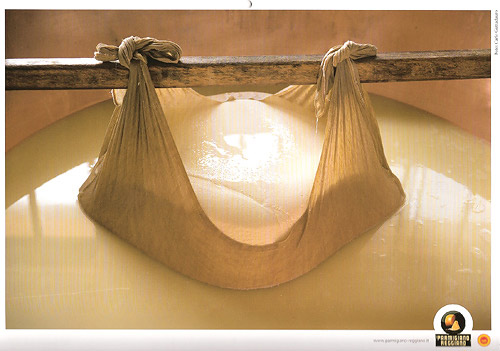
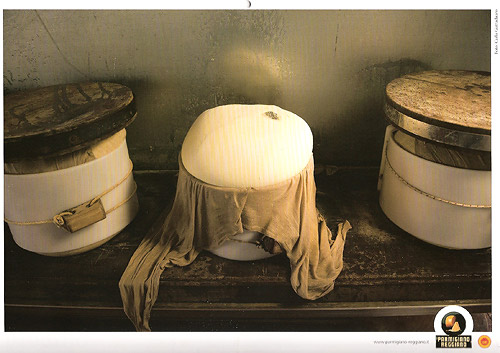
The curd is heated to approximately 55°C. The granules settle and form a single mass which, after about fifty minutes, is lifted, wrapped in cloth and divided into two twin wheels.
The wheel’s identity card
Each wheel receives a casein plate with a unique alphanumeric code. A marking band then imprints the month and year of production, the dairy identification number and the familiar dotted Parmigiano Reggiano inscription on the rind.
Brining
After a few days, the wheel is immersed in a solution of water and salt. Osmosis salts the cheese and prepares it for its long stay in the ageing warehouse.
Ageing and official inspection
After at least twelve months, every wheel is inspected by experts from the Consortium. Only compliant wheels receive the firebrand and may continue ageing.
Technical reference: the production process explained by the Parmigiano Reggiano Consortium.
Bertoni Formaggi · Suzzara
Would you like to know availability and prices?
We will reply directly with our current price list and delivery information.